
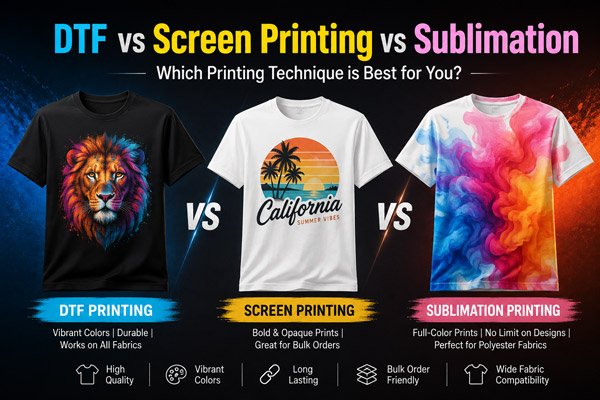
DTF vs. Screen Printing vs. Sublimation: Which T-Shirt Printing Method Is Right for You?
Choosing the right printing technique can make or break custom apparel—affecting design crispness, feel, wash longevity, and overall cost. Three methods dominate the custom printing industry: Direct-to-Film (DTF), Screen Printing, and Sublimation Printing.
Each technique has its own strengths and limitations. Understanding the differences helps in picking the best option for custom streetwear, corporate orders, or performance sportswear.
1. Direct-to-Film (DTF) Printing: The Versatile Modern Solution
How It Works
DTF printing involves printing a digital image onto a specialized transfer film using CMYK and white pigment inks. A powder adhesive is applied to the wet ink, cured with heat, and then pressed directly onto the fabric.
Strengths
Universal Fabric Compatibility: Works seamlessly on 100% cotton, polyester, poly-blends, nylon, canvas, and denim.
No Color Limits: Easily reproduces complex gradients, fine details, and photographic images without extra setup costs.
Works on Any Garment Color: White ink base layers ensure vibrant prints on both dark and light fabrics.
Low Minimum Orders: Ideal for short runs or single custom pieces without heavy setup charges.
Weaknesses
Hand Feel: Creates a thin, flexible layer on top of the fabric rather than sinking completely into the fibers.
High-Volume Unit Cost: Higher consumable costs mean it is less economical than screen printing for massive bulk runs.
Best For: E-commerce apparel brands, small-to-medium bulk orders, complex/multi-color artwork, and custom prints on dark cotton or blended fabrics.
2. Screen Printing: The Bulk Champion
How It Works
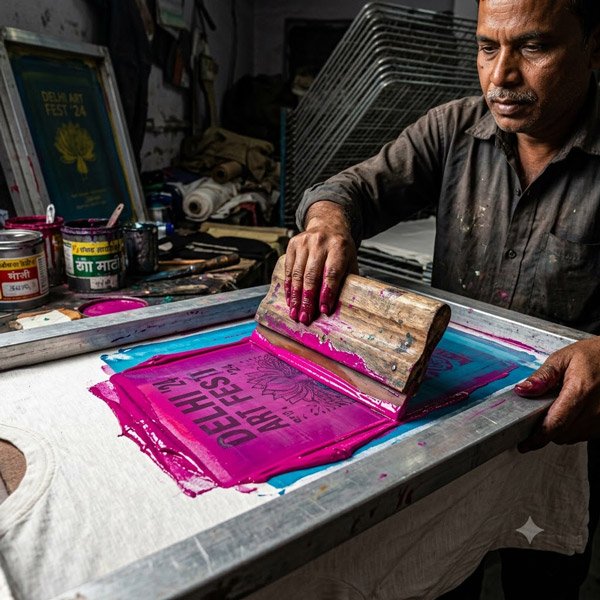
Screen printing is the traditional, time-tested method where liquid ink (usually plastisol or water-based) is pushed through fine mesh stenciled screens onto the fabric. Each color in the design requires its own custom screen.
Strengths
Unbeatable Bulk Pricing: Once screens are created, the per-unit printing cost drops significantly for high volumes.
Extreme Durability: Heavy ink deposits bond strongly to fibers, standing up to hundreds of industrial washes.
Vibrant Spot Colors: Perfect for strict brand color matching (PANTONE matching) and solid vector logos.
Specialty Effects: Allows for unique finishes like metallic, puff, glow-in-the-dark, and shimmer inks.
Weaknesses
High Setup Costs: Preparing physical stencils makes small orders (under 24–50 pieces) cost-prohibitive.
Color Restrictions: Detailed artwork with gradients or dozens of colors requires complex halftone screens and incurs high costs.
Best For: Large bulk orders (50+ units) like school uniforms, promotional campaign tees, corporate swag, and simple 1- to 3-color designs.
3. Dye-Sublimation Printing: The Seamless Activewear Standard
How It Works
Sublimation uses heat-sensitive inks that turn into a gas under extreme heat and pressure. The gas infuses directly into the synthetic fibers of the garment, permanently dyeing the material from within.
Strengths
Zero “Hand Feel”: Because the ink becomes part of the fabric, the print retains total breathability with no rubbery feel.
Permanent Durability: Sublimated prints never crack, peel, fade, or wash out over the life of the shirt.
Edge-to-Edge Capability: The gold standard for seam-to-seam, all-over prints.
Weaknesses
Polyester Only: Requires at least 65% polyester content (100% poly recommended); it cannot adhere to natural fibers like 100% cotton.
Light Fabrics Only: Inks are transparent and cannot print white, meaning it only works on white or very light-colored garments.
Best For: Activewear, sports jerseys, gym apparel, dri-fit gear, and all-over printed polyester items.
Side-by-Side Comparison
| Feature | Direct-to-Film (DTF) | Screen Printing | Sublimation |
| Best Fabric | Cotton, Poly, Blends, Canvas | Cotton, Heavy Blends | 100% Polyester / High-Poly |
| Garment Colors | Light & Dark fabrics | Light & Dark fabrics | White & Light fabrics only |
| Design Detail | Unlimited colors, photos, gradients | Best for bold logos & solid colors | Unlimited full-color, photo-real |
| Print Texture | Smooth, thin film layer | Slightly raised ink layer | Zero texture (completely flat) |
| Setup Cost | Low / None | High (per screen fee) | Moderate |
| Ideal Order Size | 1 to 100+ pieces | 50 to 10,000+ pieces | Any quantity (sports/team runs) |
Quick Verdict: Which One Should You Choose?
Choose DTF if: You want full-color, photographic, or detailed designs on dark or light cotton t-shirts, hoodies, or mixed fabric items in small-to-medium quantities.
Choose Screen Printing if: You are ordering a large run (50+ pieces) of custom t-shirts with a 1- to 3-color logo and need the absolute lowest price per shirt.
Choose Sublimation if: You are producing custom performance wear, dri-fit sports jerseys, or all-over graphic tees on light polyester fabrics.


